


Dental implants are widely regarded as a durable and functional option for replacing missing teeth, but understanding the true cost requires more than a single price figure. This guide explains the components that make up dental implant cost, how prices vary between urban and rural clinics and across countries, what typical insurance and financing pathways look like in the US, and how implants compare to alternatives when evaluated over the long term.
Introduction
Dental implants are a common solution for missing teeth because they provide functional stability by anchoring a metal post into the jawbone and supporting a prosthetic crown. For patients, dental implant cost is one of the major considerations when evaluating options; however, the headline price often omits many variables that affect out-of-pocket expenses. This article provides a structured, fact-oriented breakdown of implant pricing and factors to help patients, dental professionals, and insurance stakeholders make informed decisions. For clinical background on the procedure, see the American Dental Association overview: https://www.ada.org and a clinical summary at the National Institutes of Health: https://www.nidcr.nih.gov.
1. Regional Price Variations: Urban vs. Rural and International Differences
Definition: Regional price variation describes the differences in charges for dental implant procedures based on clinic location, local market dynamics, and international cost structures.
Urban vs. Rural: In the United States, clinics in large metropolitan areas often have higher overhead (rent, staffing, equipment capital) which can translate into higher surgical fees and laboratory charges. Some reports and market surveys indicate that urban prices for a single-tooth implant (implant, abutment, crown) are commonly reported in the range of $3,000–$6,000, while smaller or rural clinics may quote lower prices, sometimes 10–30% less depending on local demand and practice scale. These ranges are summaries of commonly reported figures and may vary by state and clinic; patients should request itemized estimates from providers to compare effectively.

International comparisons: Dental tourism is a frequently cited option for patients seeking lower-cost care. Several countries—such as Mexico, Costa Rica, Thailand, and parts of Eastern Europe—are known for lower procedural fees due to different labor and facility cost structures. It is not uncommon for implant procedures abroad to be substantially less expensive; some patients report savings that range from 40% to 70% compared with US prices. However, lower cost does not automatically imply comparable quality or post-operative support; travel, continuity of care, and regulatory differences should be carefully assessed. Reliable pre-travel research and confirmation of credentials and laboratory practices are important. For an overview of considerations for treatment abroad, consult resources from professional dental organizations and state dental boards (for example: https://www.adha.org or your local state dental board websites).
2. Cost Breakdown Components: What You're Paying For
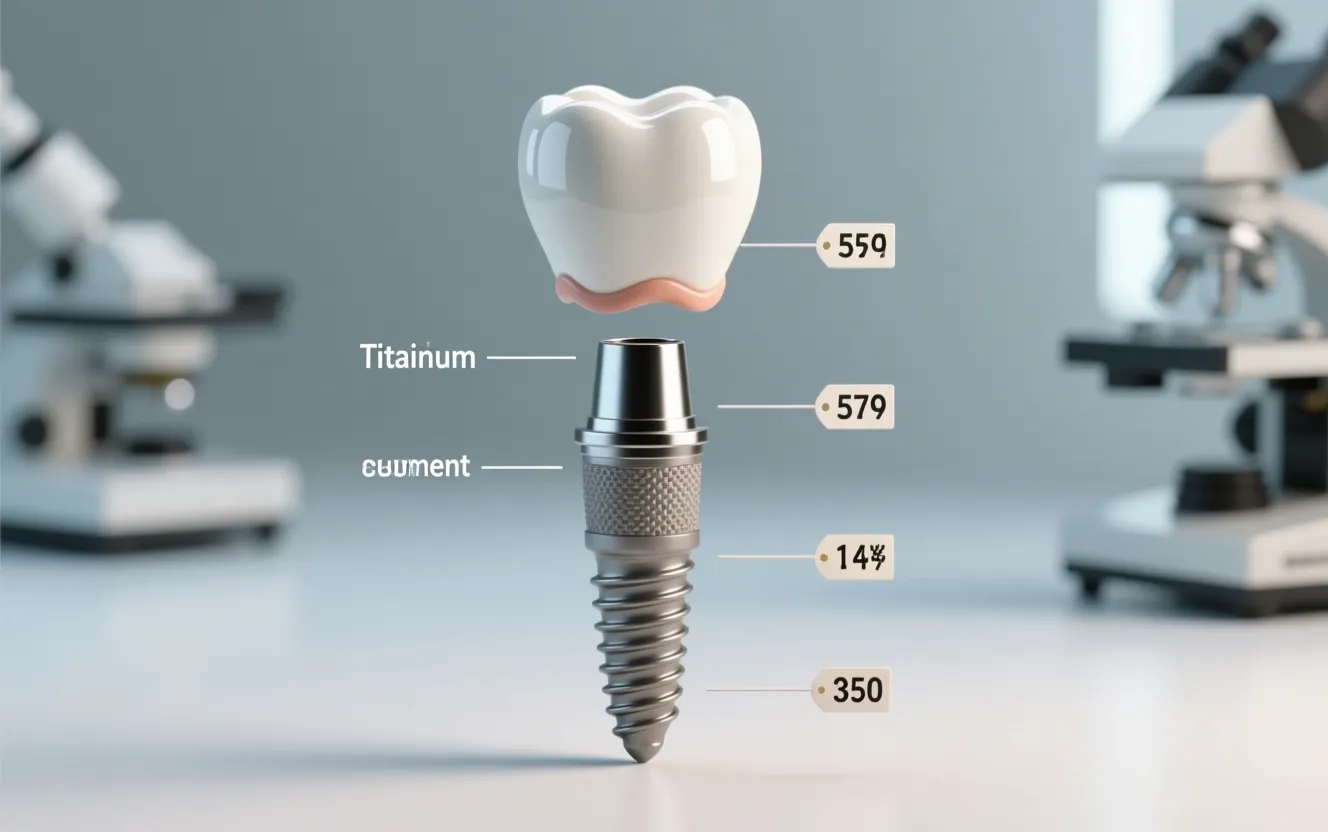
Understanding the components that contribute to the final bill helps clarify what "dental implant cost" actually includes. Major components typically include:
Implant fixture (the post): the titanium or zirconia screw placed into the jawbone.
Abutment: the connector piece that attaches the crown to the implant post.
Crown (prosthetic tooth): the visible replacement that matches adjacent teeth.
Surgical fees: surgeon or periodontist fees for implant placement.
Imaging and diagnostics: 2D X-rays or 3D cone-beam CT scans used for planning.
Preparatory procedures: bone grafting, sinus lift, or extractions if required.
Laboratory costs: fabrication of custom abutments and crowns by dental labs.
Follow-up and maintenance: postoperative visits and potential complications management.
Component | Common US Cost Range (reported) |
Implant fixture (single) | $700–$2,500 |
Abutment | $200–$800 |
Crown | $600–$2,000 |
Surgical fee (placement) | $500–$2,000 |
Imaging / planning | $100–$500 |
Bone graft / sinus lift | $300–$3,000 (if needed) |
Notes on materials: Titanium implants are the most commonly used and have a long track record in the clinical literature for osseointegration. Zirconia implants are a metal-free alternative that may be chosen for specific clinical or aesthetic reasons; zirconia components can carry a premium in cost and their long-term comparative data is evolving. Material selection affects the implant fixture cost and sometimes lab charges for prosthetics.
Laboratory costs and custom components vary widely depending on whether traditional lab-fabricated crowns or CAD/CAM milled restorations are used. Custom abutments and higher-end ceramic crowns can increase the lab portion of the bill. For more technical details on components and materials, see manufacturer literature and clinical reviews (for example: https://www.ncbi.nlm.nih.gov/ for peer-reviewed summaries).
3. Insurance and Financing Options: Making Implants Affordable
Insurance coverage: Dental insurance plans in the US vary considerably. Many standard dental plans consider implants elective restorations and provide limited or no coverage for the implant fixture itself, while some plans may cover portions of associated services (such as crowns or extractions). Employer-sponsored or private supplemental plans can have different benefit structures. Plan rules frequently limit coverage to a percentage of a specified fee schedule and may impose waiting periods or annual maximums. Patients should review plan summaries and consult plan administrators to understand coverage for "dental implant cost" elements.

Financing and payment options: Because implants can require substantial upfront payment, many practices offer in-office payment plans, third-party medical/dental financing, or lending products. These payment options may carry interest or fees; patients are encouraged to compare terms such as APR, repayment period, and total repayment cost. Some patients use healthcare credit products specifically designed for elective procedures. Independent financial counseling or comparison of lender terms can help identify reasonable options.
Practical tip: When speaking with a periodontist or implant surgeon, request an itemized estimate that separates implant fixture, abutment, crown, imaging, and any preparatory procedures. This makes it easier to determine which items a dental plan might reimburse and which will be out-of-pocket. It also supports price comparisons between providers.
4. Long-term Cost-effectiveness: Implants vs. Other Options
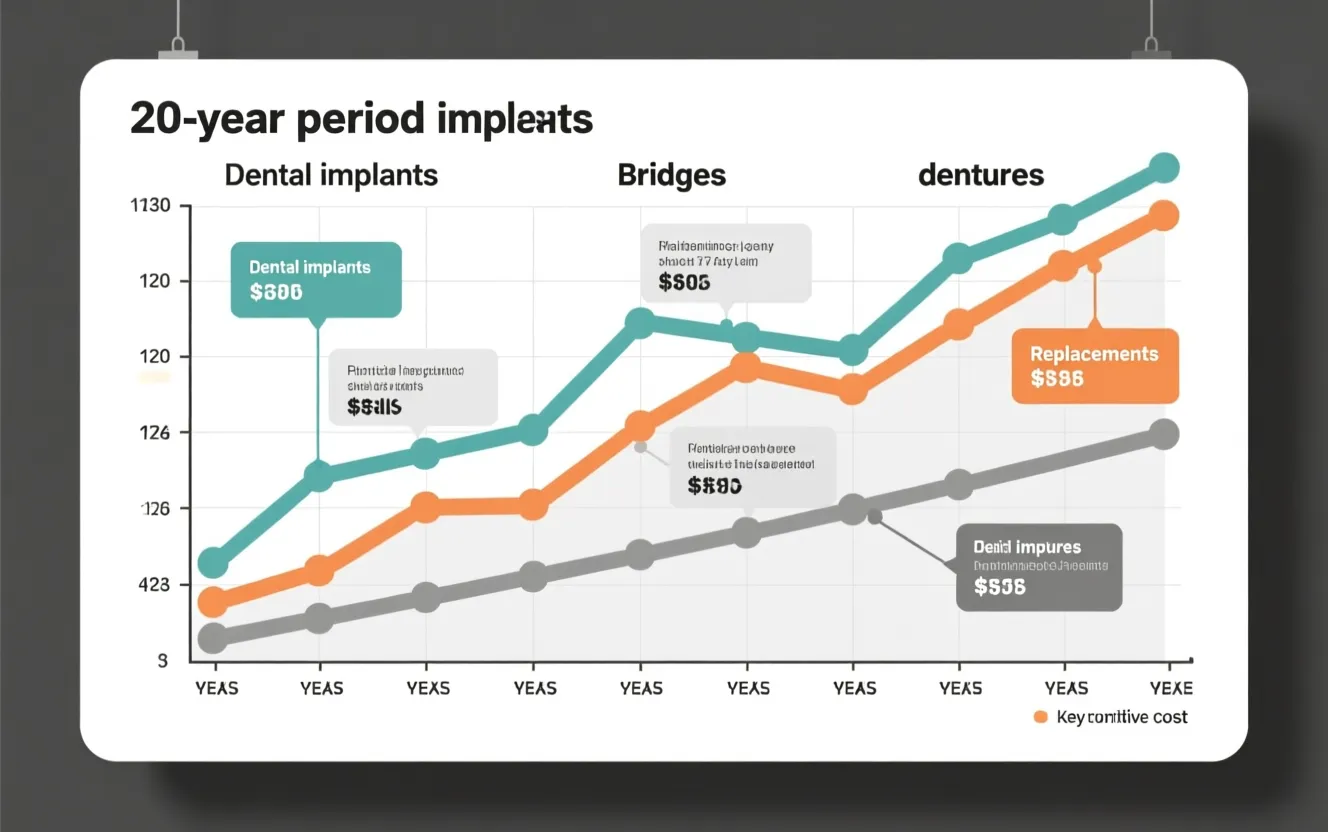
Comparative framework: Short-term sticker price is only one element. Long-term cost-effectiveness considers initial cost, expected lifespan, maintenance needs, and likelihood of future replacement or complications. Typical alternatives include removable dentures and fixed dental bridges.
Cost comparison example (conceptual): Removable partial dentures often have a lower initial cost but may require periodic replacement or adjustment; fixed bridges require preparation of adjacent teeth and may need replacement after 10–15 years. Dental implants are often priced higher initially but can provide long-term function and reduced need to alter adjacent healthy teeth. Published studies and cost-utility analyses assess these trade-offs by comparing cumulative costs over time and quality-of-life measures; such evaluations suggest implants may be cost-effective for many patients over a multi-decade horizon, but results depend on individual risk factors and maintenance.
Durability and maintenance: A well-integrated titanium implant and properly fitted crown can function for many years when maintained with good oral hygiene and routine professional care. Maintenance costs typically include periodic dental cleanings and occasional crown repair or replacement. Implants can also require intervention if peri-implant disease occurs; the risk profile depends on systemic health, smoking status, and oral hygiene adherence. Discuss these probabilities with a dental professional to estimate realistic long-term costs for your situation.
Decision Considerations and Practical Steps
1. Get an itemized treatment plan: Request a written treatment plan with separate line items for implant fixture, abutment, crown, imaging, and any preparatory procedures.
2. Compare qualifications and experience: Periodontists and oral surgeons specialize in implant placement; general dentists may also provide implant services. Factor clinician experience, facility accreditation, and laboratory partnerships into your decision.
3. Evaluate total cost over time: Consider expected lifespan and potential replacement costs for alternative treatments (bridges, dentures) to estimate lifetime expenses.
4. Review insurance and financing: Confirm what your dental plan covers, then compare financing offers by total cost and repayment terms rather than monthly payment alone.
5. Ask about warranties and follow-up care: Some practices include limited warranties on crowns or components and specific follow-up schedules. Clarify what is included in the stated dental implant cost and what would incur additional charges.
Conclusion
Dental implant cost encompasses multiple components—implant fixtures, abutments, crowns, surgical fees, laboratory work, and possible preparatory procedures—and varies by region, clinic type, and material choices. Urban clinics and specialized providers sometimes charge more due to higher overhead and expertise, while international options may offer lower prices but require careful evaluation of continuity of care. Insurance coverage for implants is inconsistent, so obtaining an itemized estimate and comparing financing options is essential for budgeting. When assessed over a longer timeframe, implants can be cost-effective relative to alternatives for many patients, but individualized clinical assessment and realistic maintenance planning are necessary. Consult a qualified periodontist or implant specialist for a comprehensive evaluation and a written treatment estimate tailored to your clinical needs. For further reading and official guidance, consider reviewing resources from the American Dental Association (https://www.ada.org) and the National Institute of Dental and Craniofacial Research (https://www.nidcr.nih.gov).


